Indian village councillors share facts about coronavirus

The coronavirus affects us all. As we move through this pandemic, we will be bringing you news from our programme countries.
Today an update from India by Ruchi Yadav, Director of Programmes of The Hunger Project India.
Government is very active
The Hunger Project India and the Indian government is taking the situation very seriously. Residents of many densely populated districts have been subject to far-reaching travel restrictions. Large cities like New Delhi, Mumbai and Bangalore are in lockdown until at least March 31, public transport has been shut down and all shops, factories and offices must remain closed. Marriage ceremonies are prohibited and the police ensure that people remain in quarantine
“Rajasthan is one of the six states where The Hunger Project India works and a popular tourist destination. Local authorities have now instituted a curfew. Due to the lockdown, it is now incredibly quiet on the street. In Delhi I can even hear the birds, I don’t remember ever hearing them here before. ” – Ruchi
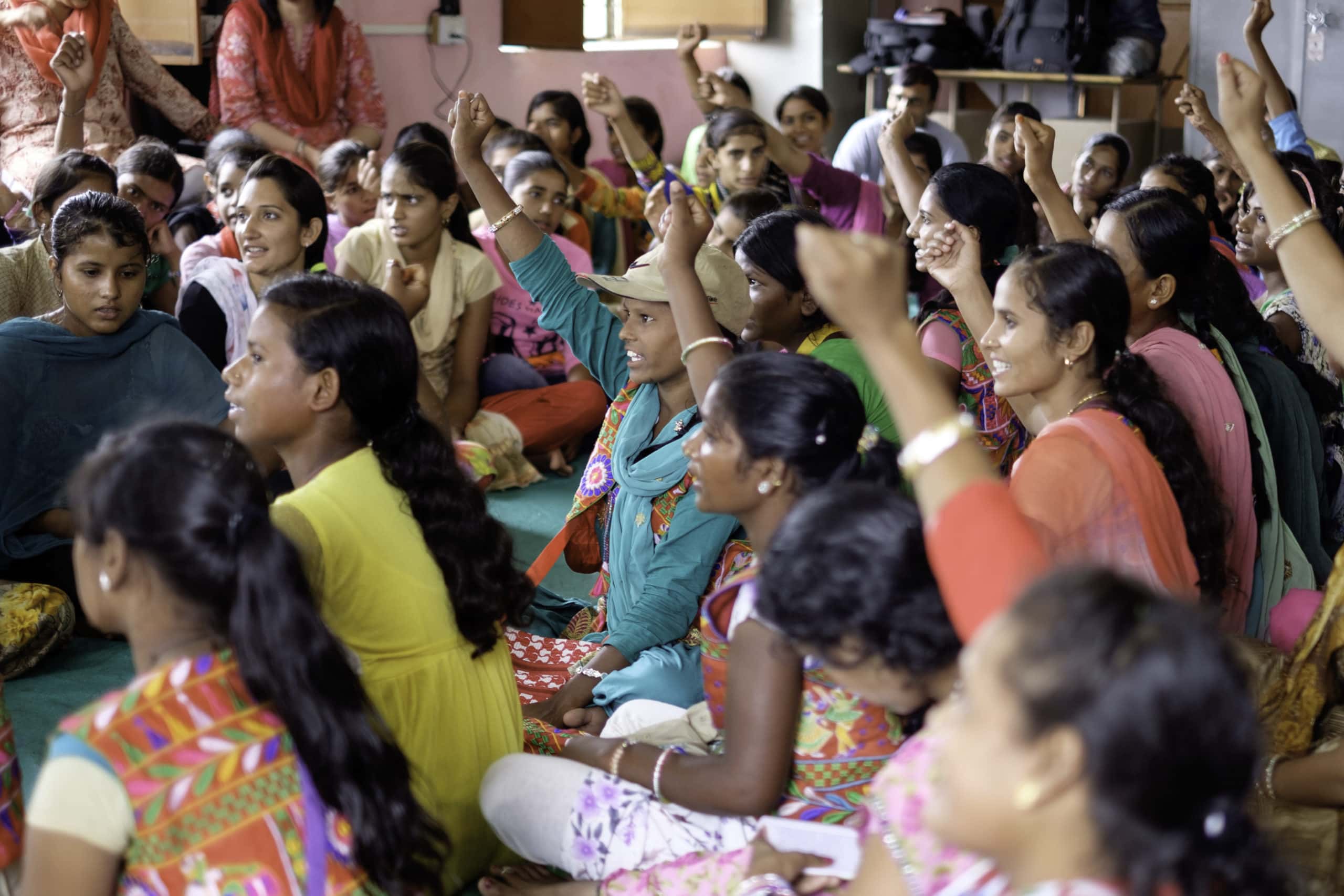
Village councils in action
The government is mainly deploying the most local political level – the panchayats, the village councils where The Hunger Project India trains thousands of female village councillors – to reach 1.3 billion inhabitants. The panchayats have been instructed to disseminate correct information about coronavirus. The local government offices train the village councillors to inform the population, and a budget is also made available for this. How do they do that?
- Via driving tuk-tuks with speakers;
- Via WhatsApp groups;
- Organising “listening groups” in villages and households
Reach everyone
Initiatives have been set up to educate as many people as possible about hygiene rules and measures in India, for example this video with handwashing instructions by Kerala police officers and telephone companies are sending voice messages in regional dialects to rural users.
“People in the countryside mainly receive information via television, social media, print media and WhatsApp when they have a smartphone. Countering myths and rumours now is very important. That is why we asked our local partners in the state of Odisha, for example, to make an information poster. Other media organizations also contribute by producing short videos. For example, this video in Hindi which we share with the female village councillors and with young girls in our programs. ”
Break the chain
“A major concern in India is the spread of the virus by migrant workers: they no longer have a job in the cities and are returning to their rural communities. Hopefully – partly thanks to the approach of The Hunger Project India and the proactive attitude of our government – the chain reaction will be broken by sharing correct information with all layers of the population. ”
It is through our relationships with community leaders on a local level that The Hunger Project is able to respond quickly and empower our partners with information to stop the spread of the virus.
Join our movement and support our communities during these challenging times
Fundraise
Join a challenge or event and raise money to end world hunger

Lead
Find out about our women’s leadership network and empowerment workshops
Partner
Align your business with the sustainable end of world hunger
Make change happen. Invest in people.
Get in touch
We believe that everyone has a role to play in the sustainable end of world hunger.
Join the conversation
Join the conversation on social, and stay connected with the latest from our partners around the world.
Stay up to date
Subscribe to our newsletter to receive updates of latest news and events.
The Hunger Project UK is a registered charity in England & Wales 1164839 and a company limited by guarantee registered in England & Wales 9583057. Registered office: 7 Bell Yard, London, WC2A 2JR.